We are proud to be a named partner in Building a Better Future, Cambridge Science Centre’s 12-month, community-focused STEM programme centred on the Built Environment sector.
The programme launched in March 2026 and runs through to Spring 2027, with the aim of delivering over 12,000 hands-on engagements with young people across Cambridge and the surrounding region.
_________________________________
What the programme does
Building a Better Future gives young people practical, hands-on STEM experiences focused on six key areas of the Built Environment: construction, infrastructure, human-centric design, ecology, land management, and finance. These sessions run across three audience types – public and family visits, school groups, and dedicated community sessions for young people facing the greatest barriers to engagement.
Partner organisation, including Potter Raper, have contributed to the programme through staff roundtables, sharing real-world knowledge and career stories that have been woven into the content young people experience at the Centre. This input has helped shape exhibits, lab-bench challenge activities, and community sessions that reflect the breadth and diversity of the Built Environment as a sector.
_________________________________
The first interim report
Nine weeks into delivery, Cambridge Science Centre has published its first interim report. The headline finding is striking: only 17.4% of young people confidently said they knew anything about the Built Environment sector. Over half of the young people attending community group sessions had not heard of it at all.
This is precisely why programmes like this matter. Despite low awareness, young people responded enthusiastically once engaged, scoring their experience 6.9 out of 7 for fun, with over 90% trying different approaches to activities rather than giving up when something did not work immediately. These are the early indicators that the programme is achieving what it set out to do: building curiosity, developing resilience, and helping young people see a sector they had not previously considered as relevant to their lives.
Over 4,000 engagements have now taken place, more than 20% of the programme’s 12,000-young-person target reached in just the first nine weeks. The programme is on track, and the baseline data now collected will be used to measure the shift in awareness, interest, and ambition among young people as the year progresses.
_________________________________
The Partner Open Day
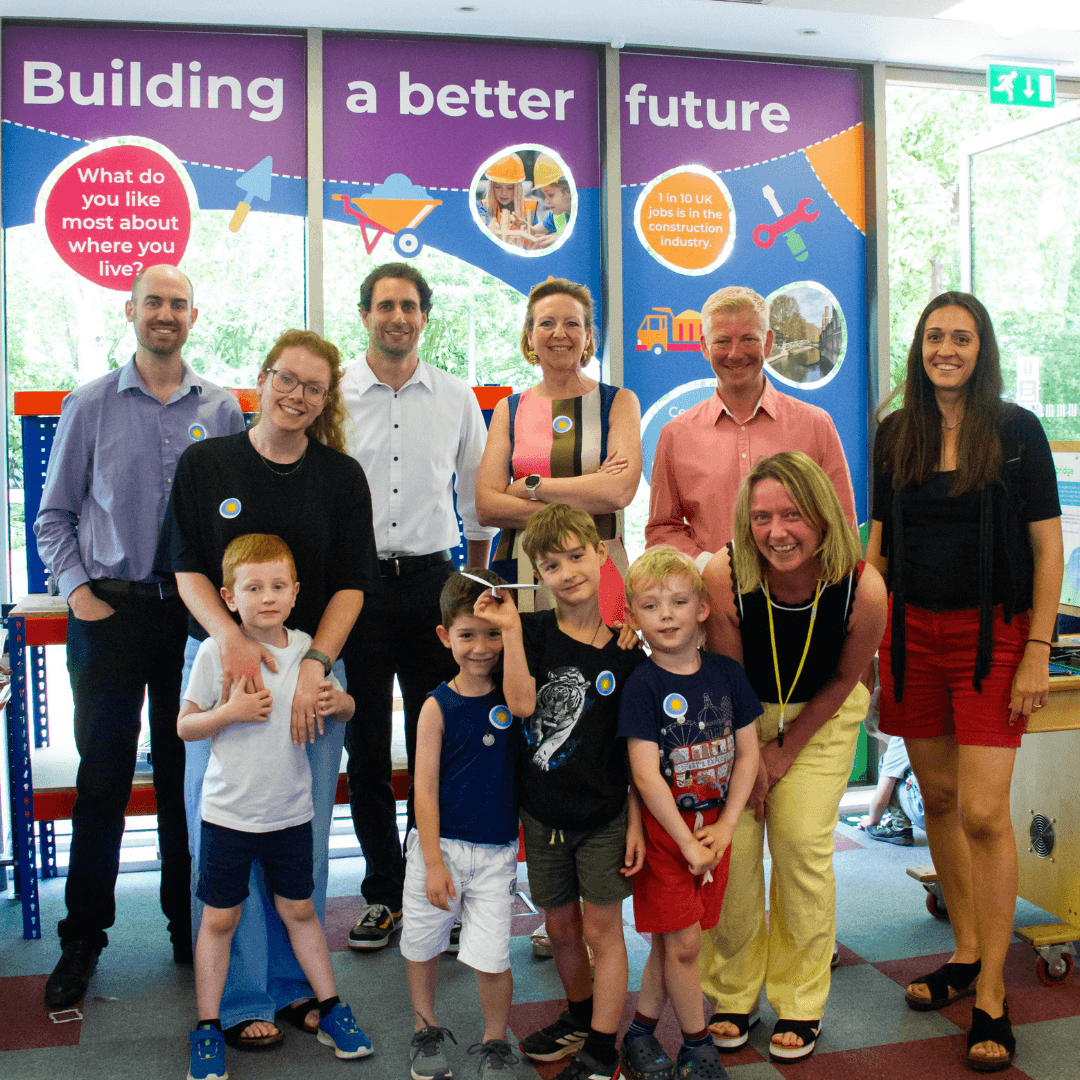
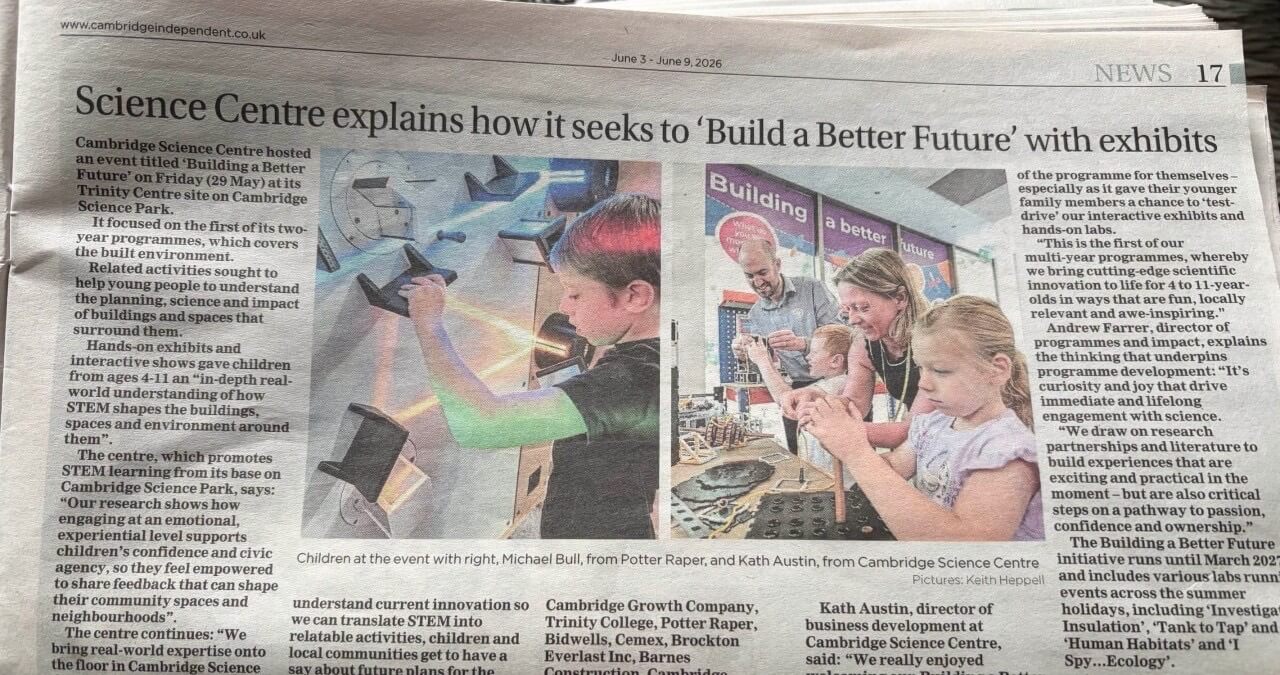
During the May half-term, Cambridge Science Centre held a Partner Open Day, giving partner organisations the chance to visit the Centre and experience the programme alongside the families and young people it is designed for. Our Cambridge Director, Michael Bull, Associate Director, Stephen Medhurst, Senior Project Manager, Rory Lowings, and Admin Assistant, Chelsea Barnes, attended with family members, trying out the exhibits and gaining a direct sense of the engagement the programme creates. The event also attracted coverage from regional BBC Radio Cambridgeshire and the Cambridge Independent, a reflection of the wider civic relevance of this work to the Cambridge region.
_________________________________
Why this matters to Potter Raper
Potter Raper is a multi-discipline construction consultancy with a Cambridge office, and the Cambridge region’s growth and development is directly relevant to our work. The talent pipeline that supports this region’s ambitions in the Built Environment starts long before university or apprenticeship applications. Supporting a programme that opens young people’s eyes to what the sector involves, and who it is for, is an investment in the long-term health of an industry we care deeply about.
We look forward to continuing our involvement in the programme through the remainder of Phase 1 and into Phase 2. The next Partner Update takes place on 24th September 2026 at Cambridge Science Centre where we will see the programme in action and hear more about how it is developing.
Read more: https://www.cambridgesciencecentre.org/building-a-better-future/
Images courtesy of Cambridge Science Centre.